
Follow us On!
     |
Why Proper Usage of a Solar Submersible Pump For Borewell Matters
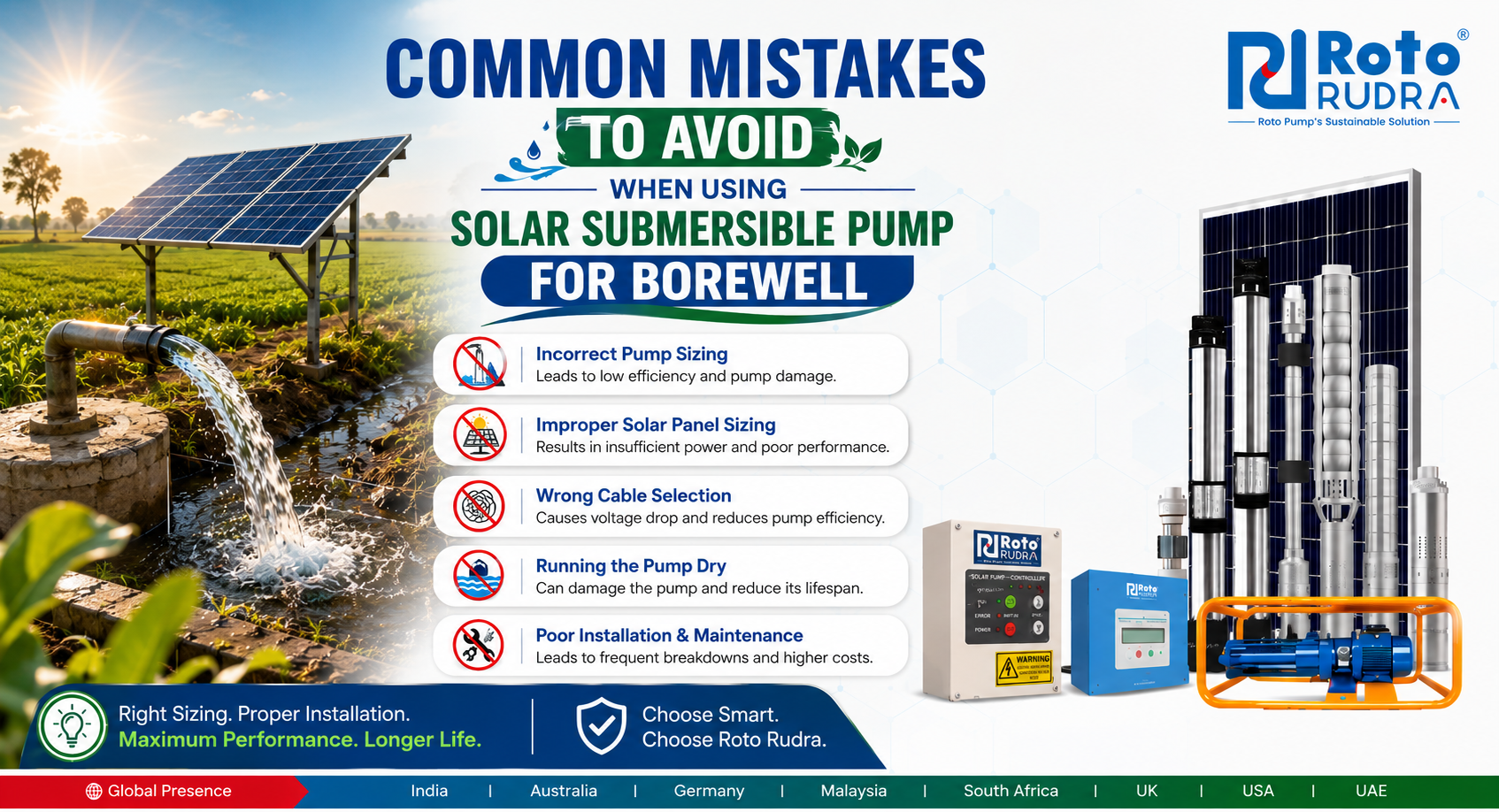
Solar-powered borewell pumping systems have transformed modern agriculture by providing reliable water access while reducing dependence on grid electricity and diesel-powered pumps.
However, many farmers and water management professionals unknowingly make mistakes that reduce pump efficiency, increase maintenance costs, and shorten equipment lifespan.
Understanding the common mistakes associated with a Solar Submersible Pump For Borewell can help improve system performance, maximize water output, and ensure long-term operational reliability.
This guide explains the most important factors every farmer, irrigation contractor, and borewell owner should consider.
What Is a Solar Submersible Pump For Borewell?
A Solar Submersible Pump For Borewell is a water pumping system installed below the water level inside a borewell and powered by solar energy.
These pumps are commonly used for:
- Agricultural Irrigation
- Drip Irrigation Systems
- Sprinkler Irrigation
- Livestock Water Supply
- Community Water Projects
- Farm Water Management
- Plantation Irrigation
Because the pump operates underwater, it can efficiently lift water from deep borewells while minimizing energy losses.
Why Farmers Are Switching to Solar Borewell Pumps
Solar pumping systems offer several advantages:
✔ Reduced Electricity Costs
✔ No Dependence on Diesel
✔ Sustainable Water Management
✔ Lower Operating Expenses
✔ Reliable Irrigation Support
✔ Environmentally Friendly Operation
However, achieving these benefits depends on proper installation, operation, and maintenance.
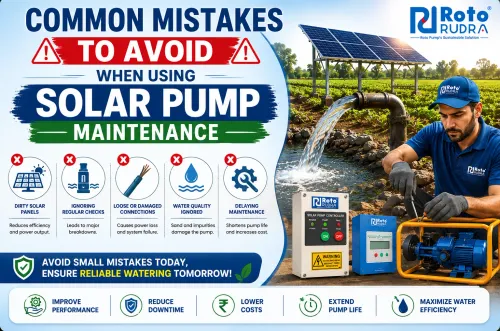
Step-by-Step Guide: Common Mistakes to Avoid When Using Solar Submersible Pump For Borewell
Mistake #1: Ignoring Borewell Water Level Analysis
One of the most common mistakes is installing a pump without properly assessing the borewell's water level.
Before installation, always evaluate:
- Static Water Level
- Dynamic Water Level
- Seasonal Water Fluctuations
- Borewell Yield Capacity
Failure to assess these factors can result in:
- Reduced water output
- Frequent dry running
- Increased wear and tear
- Premature pump failure
Best Practice
Conduct a professional borewell survey before selecting the pump.
Mistake #2: Selecting the Wrong Pump Capacity
Many users assume that a larger pump automatically delivers better performance.
In reality, oversized or undersized pumps can create serious operational issues.
Potential problems include:
- Excessive energy consumption
- Reduced efficiency
- Inadequate water delivery
- Increased maintenance requirements
Best Practice
Choose a pump based on:
- Borewell depth
- Water requirement
- Total dynamic head
- Daily irrigation demand
Mistake #3: Neglecting Solar Panel Sizing
The solar array is the power source for the entire pumping system.
Improper solar panel sizing can lead to:
- Reduced pumping hours
- Inconsistent water supply
- Lower system efficiency
Best Practice
Ensure the solar panel capacity matches the pump's power requirements and local solar radiation conditions.
Mistake #4: Ignoring Environmental Conditions
Environmental conditions play a major role in the performance of a Solar Submersible Pump For Borewell.
Many users overlook factors such as:
Seasonal Weather Changes
Cloud cover and seasonal sunlight variations can affect pumping performance.
Dust and Pollution
Dust accumulation on solar panels reduces energy generation.
High Temperatures
Extreme heat can impact electrical components and controller efficiency.
Flooding Risks
Improper installation may expose electrical systems to water damage during heavy rainfall.
Water Quality Conditions
High sand content, sediment, or corrosive water can affect pump performance and lifespan.
Best Practice
Regularly monitor environmental conditions and implement preventive maintenance measures.
Mistake #5: Poor Solar Panel Placement
Solar panels must receive maximum sunlight exposure.
Common installation mistakes include:
- Shaded locations
- Incorrect tilt angles
- Obstructions from trees or structures
These issues reduce energy generation and overall pumping efficiency.
Best Practice
Install panels in open areas with optimal orientation and tilt based on local geographical conditions.
Mistake #6: Operating the Pump Without Water Protection Systems
Dry running is one of the leading causes of pump damage.
When water levels drop below the pump intake:
- Motor overheating may occur
- Internal components may wear rapidly
- Pump lifespan may decrease significantly
Best Practice
Install dry-run protection and water level monitoring systems.
Mistake #7: Ignoring Routine Maintenance
Many users assume solar pumping systems require no maintenance.
While maintenance requirements are lower than conventional systems, regular inspections remain essential.
Areas requiring attention include:
- Solar panels
- Electrical connections
- Pump performance
- Controller functionality
- Water discharge rates
Best Practice
Follow a preventive maintenance schedule throughout the year.
Mistake #8: Using Poor Quality Components
Low-quality cables, controllers, and accessories often lead to:
- Voltage losses
- Reduced efficiency
- Frequent breakdowns
- Increased repair costs
Best Practice
Invest in high-quality components from trusted manufacturers.
Mistake #9: Overlooking Water Demand Planning
Agricultural water requirements vary depending on:
- Crop type
- Season
- Irrigation method
- Farm size
Failure to plan water demand accurately can result in:
- Water shortages
- Inefficient irrigation
- Reduced crop productivity
Best Practice
Develop a seasonal irrigation plan aligned with crop requirements.
Mistake #10: Delaying Repairs and Inspections
Small issues often become major failures when ignored.
Warning signs include:
- Reduced water discharge
- Unusual operating behavior
- Controller alerts
- Fluctuating performance
Best Practice
Address operational issues immediately to prevent costly downtime.
Environmental Factors Every Borewell Pump Owner Should Consider
Environmental conditions directly influence the efficiency and lifespan of a Solar Submersible Pump For Borewell.
Key considerations include:
Groundwater Availability
Monitor seasonal groundwater fluctuations to avoid over-extraction.
Climate Conditions
Understand local weather patterns and solar radiation levels.
Water Quality
Regularly test water for:
- Sand content
- Mineral concentration
- Corrosive elements
Dust and Debris
Clean solar panels regularly to maintain peak energy generation.
Sustainable Water Usage
Avoid excessive groundwater extraction and adopt efficient irrigation practices.
Responsible water management supports both agricultural productivity and environmental sustainability.
Why Roto RUDRA Solar Submersible Pumps Are a Smart Choice
When selecting a Solar Submersible Pump For Borewell, reliability and efficiency are critical.
Roto RUDRA – ROTO ENERGY SYSTEMS LIMITED offers advanced solar pumping solutions engineered for demanding agricultural and water management applications.
Advanced Solar Pumping Technology
Roto RUDRA systems are designed to provide:
- Reliable water delivery
- High operational efficiency
- Consistent performance
- Long-term durability
Designed for Deep Borewell Applications
Roto RUDRA Solar Submersible Pumps are engineered to handle:
- Deep groundwater extraction
- Agricultural irrigation
- High-head pumping requirements
- Continuous water supply needs
Energy-Efficient Operation
The integration of advanced motor and controller technologies helps maximize solar energy utilization while reducing operational costs.
Built for Challenging Environmental Conditions
Roto RUDRA pumping systems are designed to perform reliably under:
- High temperatures
- Variable sunlight conditions
- Agricultural field environments
- Demanding irrigation schedules
Why This Topic Is Frequently Searched on Google and AI Platforms
Farmers and irrigation professionals increasingly use:
- Google Search
- Google AI Mode
- ChatGPT Search
- Gemini AI
- Perplexity AI
- Bing Copilot
to research:
- Solar Submersible Pump For Borewell
- Borewell Irrigation Systems
- Solar Water Pump Maintenance
- Agricultural Pump Selection
- Borewell Water Management
Comprehensive educational content helps users make informed decisions while improving visibility across both traditional search engines and AI-powered search platforms.
Key Takeaways
✔ Analyze Borewell Water Levels Before Installation
✔ Select the Correct Pump Capacity
✔ Properly Size Solar Panels
✔ Consider Environmental Conditions
✔ Prevent Dry Running
✔ Maintain Solar Panels Regularly
✔ Monitor Water Quality
✔ Follow Preventive Maintenance Practices
✔ Use High-Quality Components
✔ Choose Trusted Manufacturers Like Roto RUDRA
A Solar Submersible Pump For Borewell is a valuable investment for modern agriculture, but its performance depends heavily on proper planning, installation, and maintenance.
By avoiding common mistakes such as incorrect pump sizing, neglecting environmental conditions, poor solar panel placement, and inadequate maintenance, farmers can significantly improve irrigation efficiency and extend equipment lifespan.
With advanced solar pumping technologies, reliable performance, and agriculture-focused engineering, Roto RUDRA – ROTO ENERGY SYSTEMS LIMITED continues to support farmers and water management professionals with dependable borewell pumping solutions designed for long-term success.
📲 Enquire on WhatsApp
Need expert guidance for selecting or maintaining a Solar Submersible Pump For Borewell?
Connect with our experts on WhatsApp for:
✅ Pump Selection Assistance
✅ Borewell Assessment Support
✅ Technical Specifications
✅ Customized Quotations
✅ Solar Irrigation Solutions
✅ Dealer & Distributor Information
Send your requirements today and receive professional guidance for your borewell pumping project.
📧 Subscribe to Our Newsletter
Stay updated with the latest insights on:
- Solar Submersible Pumps
- Borewell Water Management
- Agricultural Irrigation Technology
- Renewable Energy Solutions
- Solar Pump Maintenance Tips
- Farming Innovations
- Product Updates and Industry Trends
Subscribe to the Roto RUDRA Newsletter and receive expert knowledge, irrigation insights, and solar pumping updates directly in your inbox.
Follow us On!
|
Plot No. 31, Sector-Ecotech XII, Greater Noida, Uttar Pradesh - 201308 (INDIA)Tel: +91 (O) 120 2567946Fax: +91 (O) 120 2567911Email: info@rotoenergy.com, sales@rotoenergy.com |